Design a Fair Comparison
Why most in-platform creative tests measure auction routing rather than design effects—and how to structure clean visual hypotheses.
The hazard of dynamic budget allocation during creative learning
When analysts place four distinct images inside a standard ad set with automated budget optimization enabled, the delivery algorithm acts as a greedy multi-armed bandit. Within the first three to six hours of flight, whichever image happens to capture a few inexpensive clicks receives the vast majority of remaining impressions. The other three variants are starved of delivery before reaching statistical stability.
While dynamic allocation is helpful for maximizing short-term media efficiency when you do not care why an ad won, it ruins creative research. If Variant C receives 85% of the budget on a high-traffic Thursday evening and Variant A receives 4% of the budget during off-peak hours, comparing their aggregate cost per acquisition tells you nothing about whether Variant C's color palette or crop is genuinely superior.
"If two images do not face the same audience segment, across the same placement inventory, during the same hours of the week, you are comparing media delivery paths—not visual craft." — Protocol 04, Controlled Split Testing
Structuring a single-variable visual matrix
True creative learning accumulates when each test alters a single, clearly defined visual mechanism while holding every surrounding element constant. Instead of testing "Concept A (Studio Flatlay)" against "Concept B (Outdoor Model Lifestyle with Discount Badge)," decompose the visual differences into sequential steps:

Macro vs. Full-Object Framing
Keep the studio lighting, background color, and headline identical. Test whether filling 70% of the frame with material texture outperforms showing the complete product silhouette.
High-Key Warm vs. Low-Key Dark
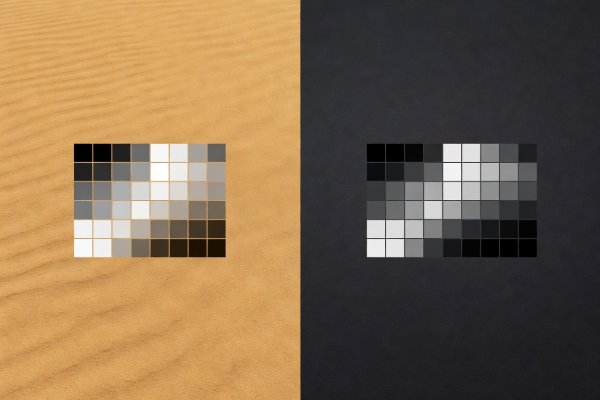
Lock the winning crop from Step 1. Test whether a warm parchment background (#FAF6EF) or a deep obsidian surface produces stronger figure-ground separation in dark-mode feeds.
Clean Photography vs. Spec Label
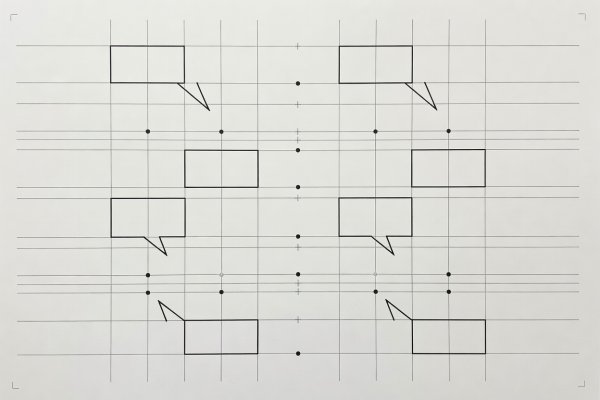
Lock both crop and background. Introduce a concise 4-word monospace callout bar to test whether explicit specification labeling improves post-click landing hold.
Preventing audience overlap and placement skew
To execute a clean comparison where you want to learn a transferable visual rule, use dedicated split-testing frameworks that partition the target audience into mutually exclusive, statistically equivalent buckets prior to auction entry. Furthermore, manually restrict placements during the test window. If an image is designed at 4:5 (1080 × 1350 pixels), evaluate it strictly inside vertical feed placements rather than letting automatic placement rules stretch or letterbox the file into right-hand column or story slots.
Experimental Validity Verification
- [A] Non-Overlapping Audience Splits: Ensure a single user cannot see both Variant A and Variant B during the experiment window, preventing cross-contamination.
- [B] Equal Budget Enforcement: Force equal spend or equal impression quotas across test cells until the predetermined sample threshold is met.
- [C] Social Proof Reset: Launch all test cells as fresh post IDs at zero likes and zero comments so accumulated social proof does not bias new viewers.
- [D] Pre-Registered Stopping Rule: Document the exact date and impression count at which the test concludes to prevent "peeking" and stopping at a random peak.